 Image 1 of 2
 Image 2 of 2
Backstage smells like hairspray and hot lights. The fashion model sits in a folding chair, legs crossed, robe half-slipped from one shoulder, waiting for her cue. She’s walked this runway a hundred times—Paris, Milan, New York—and the thrill has thinned into routine. Around her neck, grounding her in the chaos, is the Grayscale Chevron Infinity Scarf.
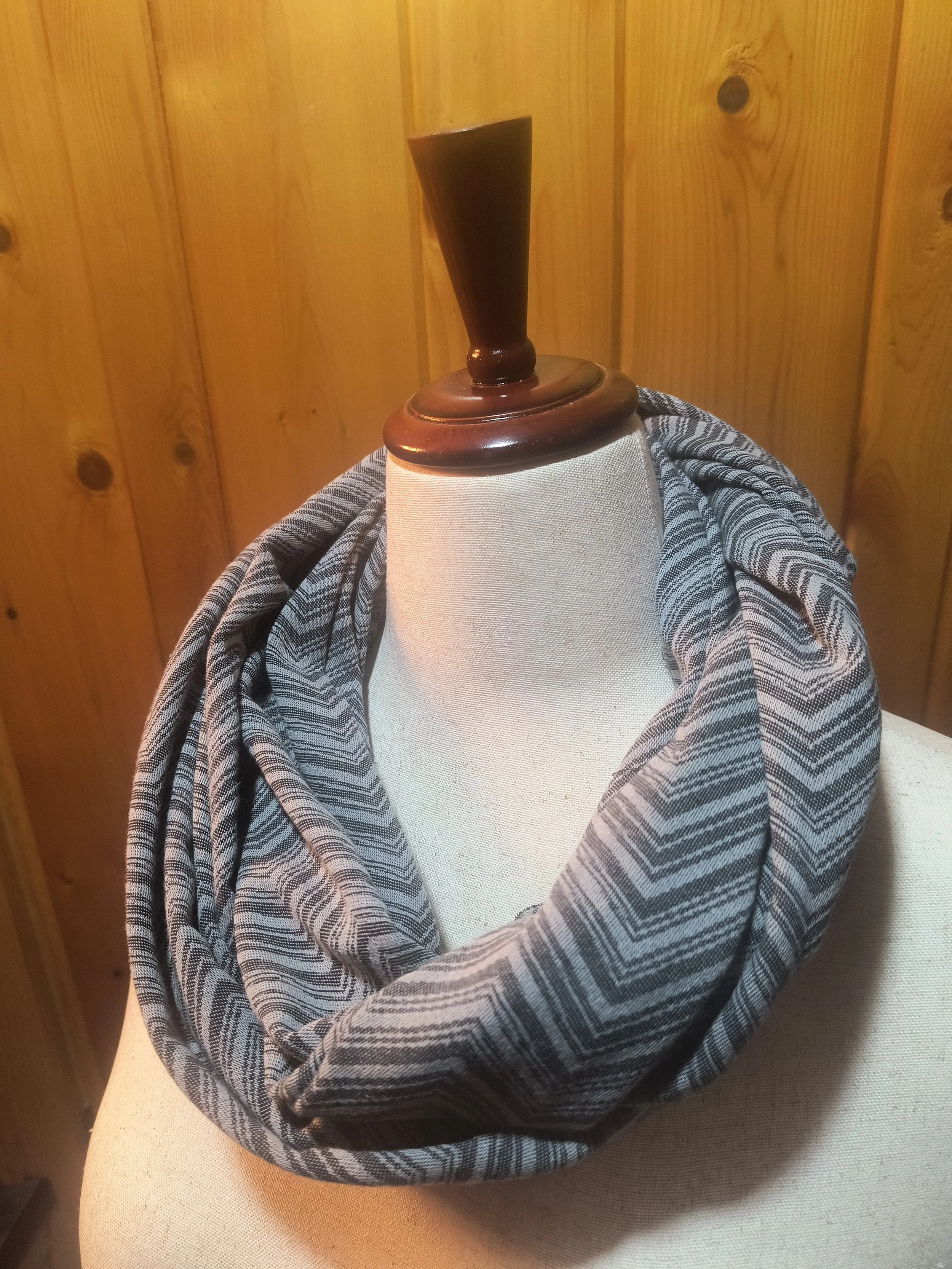
The soft flannel rests warm and familiar against her skin, a quiet contrast to the sharp lines of the clothes waiting on racks. Black geometric chevrons cut cleanly across the gray fabric—orderly, repeating, dependable. At about 58 inches around and 10 inches wide, the scarf wraps twice around the neck with ease, settling into place without fuss, staying put while everything else feels temporary.
As the stage manager calls out timings, her mind drifts far from the catwalk. She imagines open land instead of spotlights. Early mornings instead of late nights. A hillside dotted with sheep, their wool thick and imperfect, steam rising as they move through fog. She pictures herself in boots instead of heels, the same scarf pulled tight against the wind, useful now in a way runway pieces rarely are.
The chevrons start to feel less like fashion and more like fences, fields, careful planning—geometry with purpose. The flannel makes sense in this daydream: durable, warm, made for work and weather rather than applause. It’s the kind of scarf you’d wear checking fences, carrying feed, leaning on a gate and watching the sky change.
Backstage smells like hairspray and hot lights. The fashion model sits in a folding chair, legs crossed, robe half-slipped from one shoulder, waiting for her cue. She’s walked this runway a hundred times—Paris, Milan, New York—and the thrill has thinned into routine. Around her neck, grounding her in the chaos, is the Grayscale Chevron Infinity Scarf.
The soft flannel rests warm and familiar against her skin, a quiet contrast to the sharp lines of the clothes waiting on racks. Black geometric chevrons cut cleanly across the gray fabric—orderly, repeating, dependable. At about 58 inches around and 10 inches wide, the scarf wraps twice around the neck with ease, settling into place without fuss, staying put while everything else feels temporary.
As the stage manager calls out timings, her mind drifts far from the catwalk. She imagines open land instead of spotlights. Early mornings instead of late nights. A hillside dotted with sheep, their wool thick and imperfect, steam rising as they move through fog. She pictures herself in boots instead of heels, the same scarf pulled tight against the wind, useful now in a way runway pieces rarely are.
The chevrons start to feel less like fashion and more like fences, fields, careful planning—geometry with purpose. The flannel makes sense in this daydream: durable, warm, made for work and weather rather than applause. It’s the kind of scarf you’d wear checking fences, carrying feed, leaning on a gate and watching the sky change.